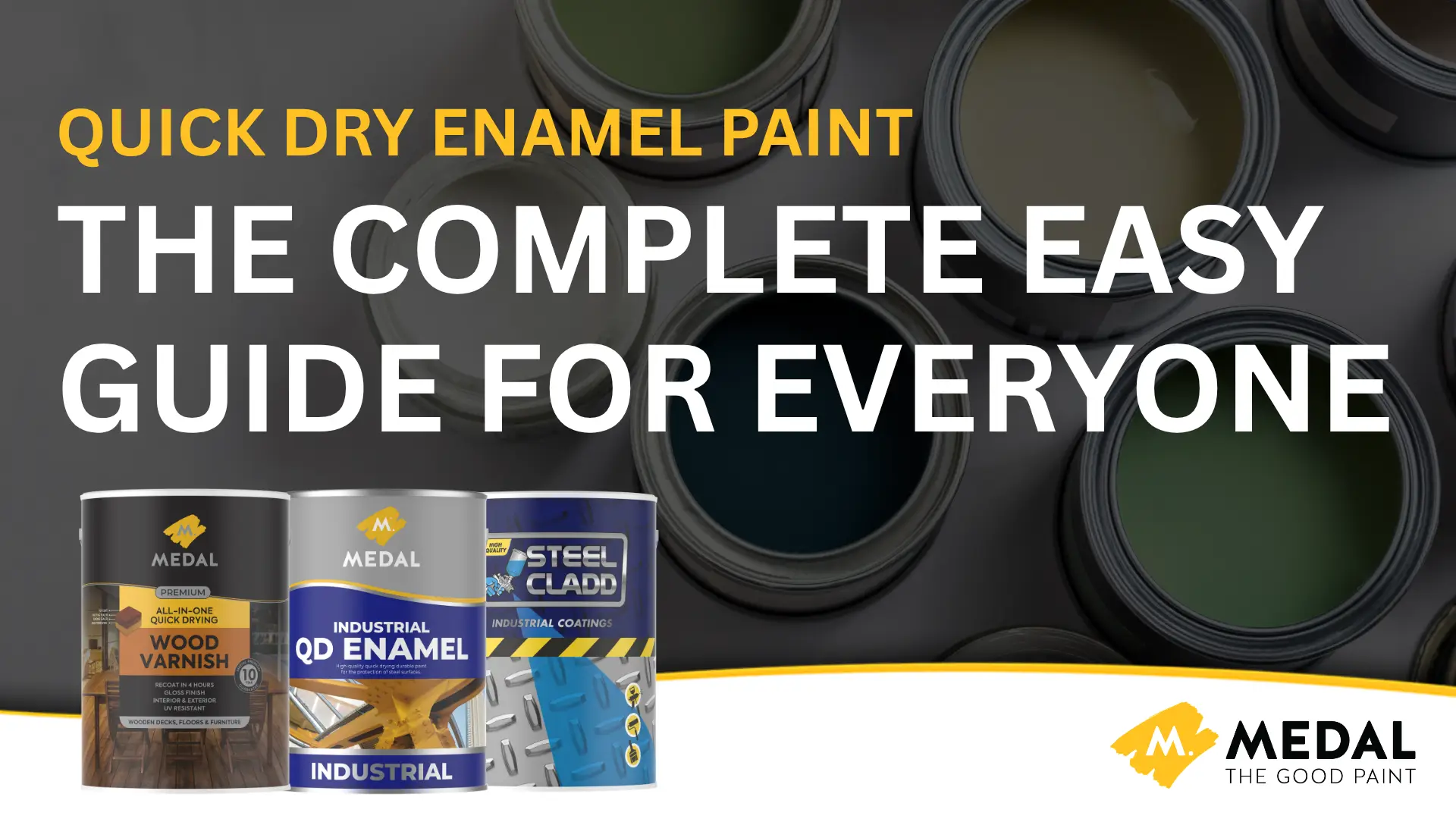
Painting a gate, door, furniture, or any metal surface can feel a bit confusing, especially when you start hearing terms like quick dry enamel paint. You might start thinking about what it actually means and if it’s the correct paint to use. Don’t worry, you are at the right place where we explain everything about Quick Dry Enamel Paint. We will cover the topics such as:
- What Is Quick Dry Enamel Paint?
- Why People Prefer Quick Dry Enamel Paint Today?
- Common Uses of Quick Dry Enamel Paint
- Indoor vs Outdoor Use of Quick Dry Enamel Paint
- Why Surface Preparation is Important for Quick Dry Enamel Paint?
- How to Apply Quick Dry Enamel Paint (Step-by-Step)
- Brush vs Roller vs Spray – Which is Best
- How to Clean or Remove Quick Dry Enamel Paint
- How Long Does Quick Dry Enamel Paint Take to Dry?
- Common Mistakes People Make with Enamel Paint
What Is Quick Dry Enamel Paint?
Quick dry enamel paint is a type of paint that dries faster than regular enamel paint and forms a hard, smooth, and shiny surface after drying. Compared to regular wall paint, enamel paint dries faster, becomes hard once it sets, and is easy to clean. It also gives both a glossy or semi-gloss finish. Because of these benefits, quick dry enamel paint is commonly used on metal, wood, furniture, doors, grills, machinery, etc.
Why People Prefer Quick Dry Enamel Paint Today?
Quick dry enamel paint is becoming popular because of two main reasons:
- It saves time
- It gives a professional look even for home painting jobs
Additionally, quick dry enamel paint is highly used in busy homes, small workshops, factories, warehouses, etc., because:
- Due to fast drying, you don’t need to wait for days
- It forms a strong surface that resists scratches and wear
- For old surfaces, it gives a smooth and shiny look
- Easy maintenance as stains can be cleaned easily
- It can be used on both indoor and outdoor surfaces
Common Uses of Quick Dry Enamel Paint
Quick dry enamel paint is mainly used on surfaces that need strength, protection, and shine. It is especially useful in high-touch areas or areas exposed to dust and moisture. You can use it for:
- Metal gates and grills
- Wooden doors and windows
- Furniture (wooden or metal)
- Industrial machines and tools
- Stair railings
- Cupboards and cabinets
Quick Dry Enamel Paint for Metal
Metal is one of the best surfaces for quick dry enamel paint.
Why enamel paint works well on metal:
- Gives protection to metal from dust and moisture
- Helps prevent rust
- Handles outdoor weather
- Gives a clean glossy finish
Common metal surfaces painted with enamel:
- Gates
- Window grills
- Railings
- Steel furniture
Note: If you apply enamel paint on bare metal without primer, it can cause peeling and rust later.
Quick Dry Enamel Paint for Wood
Quick dry enamel paint can also be used on wood.
Suitable wooden surfaces:
- Doors
- Windows
- Furniture
- Cabinets
Essential steps for applying on wood:
- Properly sand the wood surface
- Remove dust completely
- Apply a wood primer
- Apply enamel paints in thin coats to ensure even drying, smooth finish, better adhesion, and durability.
Can Quick Dry Enamel Paint Be Used on Walls?
Yes, quick dry enamel paint can be used on walls, but not for all walls.
Recommended areas:
- Kitchen walls
- Bathroom dry areas
- Staircase walls
- Washable wall sections
Not recommended: full bedrooms, large living rooms because they are highly shiny and have a strong smell during application
Indoor vs Outdoor Use of Quick Dry Enamel Paint
Indoor Use
Quick dry enamel paint works well on doors, windows, furniture, and cabinets inside your home. Since it dries fast and gives a glossy finish, it’s perfect for high-touch surfaces. Make sure the room is well-ventilated while painting because it has a strong smell. Also, apply thin coats for an even finish and to avoid paint dripping.
Outdoor Use
This paint is suitable for gates, railings, outdoor furniture, and metal structures that usually come in direct contact with the environment. It provides a durable, protective layer against sunlight and moisture. Avoid painting in rainy or humid conditions, as water can affect the finish and adhesion.
Whether indoors or outdoors, always clean and prepare the surface properly to help the paint stick better and last longer.
Why Surface Preparation is Important?
Poor surface preparation is one of the main causes of paint failures.
Simple preparation steps:
- Clean the surface (remove dust, grease, rust)
- Sand the surface lightly
- Apply a suitable primer
- Once primer is fully dry, apply paint
Problems arising from poor surface preparation:
- Paint peeling or flaking
- Bubbles in the paint
- Surface looks dusty and patchy
- Poorly dried surfaces create fungus and mold
How to Apply Quick Dry Enamel Paint? (Step-by-Step)
Materials needed:
- Quick dry enamel paint
- Primer
- Brush, roller, or spray gun
- Sandpaper (For primer: 180–220 grit; For paint: 320–400 grit)
- Thinner (use only the thinner recommended by the manufacturer)
Step-by-step process:
Prepare the surface:
- Clean the wall, metal, or wood with mild soapy water to remove dust and grease
- Use sandpaper to smooth the surface
- Wipe away sanding dust with a clean cloth
Apply the primer:
- Apply the primer in thin coats
- Allow enough time to dry
- Once dry, sand lightly
Make ready the paint:
- Always mix the paint before application
- Ensure nothing is left at the bottom of the can
- Use the right quantity of thinner recommended by the manufacturer
Paint the surface:
- Apply using brush, roller, or spray
- Apply in thin coats to avoid dripping
- Hard dry takes about 2–4 hours; full cure takes 1–2 days
Apply 2–3 coats:
- For a more even and shiny look, apply 2–3 coats
- Allow each coat to dry before applying the next
Final touch:
- Fix uneven spots with a brush if necessary
- Allow it to fully dry for about 1–2 days before use
Brush vs Roller vs Spray – Which is Best?
Brush:
- Good for edges and small areas
- Easy for beginners
- May leave brush marks; use a soft-bristle brush
Roller:
- Best for flat surfaces
- Faster application
- Provides an even finish
Spray:
- Smoothest finish
- Looks professional
- Requires skill and proper thinning
How to Clean or Remove Quick Dry Enamel Paint?
Quick dry enamel paint becomes hard after drying, but it can still be removed with the right method. Before you start:
- Identify the surface (metal, wood, wall, etc.)
- Wear gloves, safety goggles, apron, and mask
- Ensure proper ventilation
- Test on a small area first
Methods:
Use thinner (for iron, steel, metal doors, grills)
- Apply thinner to a cloth
- Rub slowly on the paint
- Paint will soften and come off
- Wipe with a clean cloth
Use heat (for metal and wood)
- Use a heat gun on the painted area
- Paint will loosen
- Scrape with a scraper or old knife
- Clean remaining paint with a cloth
- Do not overheat
Use sandpaper (for wood and metal)
- Rub sandpaper on the paint
- Paint will slowly peel off
- Clean dust after sanding
- Wear a mask to avoid inhaling dust
Use paint remover (for very hard or old paint)
- Apply the paint remover with a brush.
- Wait for a few minutes to let it work.
- Scrape off the loosened paint and clean the surface.
- Always follow the manufacturer’s instructions and avoid rubbing too hard.
How Long Does Quick Dry Enamel Paint Take to Dry?
| Drying Stage | Time | Explanation |
| Touch dry | 20–30 min | Surface feels dry but not fully cured |
| Hard dry | 2–4 hours | Safe for normal handling |
| Recoat | 4–6 hours | Next coat can be applied safely |
| Fully cured | 24–48 hours | Paint is fully dry and ready for use |
Factors affecting drying time.
- Temperature
- Humidity
- Ventilation
- Paint thickness
- Surface type
- Thinner used
Why paint may not dry properly?
- Cold weather
- Damp conditions
- Old or expired paint
- Wrong thinner ratio
Common Mistakes People Make with Enamel Paint
- Applying thick coats → drips and uneven finish
- Applying the next coat too soon → peeling, poor adhesion
- Not cleaning the surface properly → rough finish, bubbles, shorter paint life
- Using the wrong thinner → poor finish, loss of shine, uneven flow
- Painting in rainy or humid weather → dull finish, white patches, slow drying
- Using low-quality brushes/rollers → brush marks, rough surface, uneven levelling
- Skipping primer → early peeling, rust on metal, stains on wood
Frequently Asked Questions
1.Does quick dry enamel paint need primer?
Yes, it improves adhesion and durability.
2.Can I paint a car with it?
Only for small DIY parts. Professional car painting requires automotive-grade paints.
3.Is Quick Dry Enamel Paint waterproof?
No, it is not called as waterproof, but it is water-resistant once fully cured.
4.Is Quick Dry Enamel Paint right for me?
Yes, if you want fast drying, strong and glossy finish, easy cleaning, and long-lasting protection.
Conclusion.
People who are looking for versatile, shiny, durable, fast drying and strong finish on metal, wood and wall can use quick dry enamel paint. As we mentioned in the article, make sure to prepare the surface properly and avoid mistakes before and during painting. You can check out our enamel paints on our website- www.medalpaints.co.za tailored to meet all your requirements.