

When people think about painting their home, they usually pay attention to colour selection. However, only paint professionals know that colour is just half the story behind every paint job. The other half is the finish, which refers to how the paint looks after it dries.
In this article, we will talk about the story of surface finishes. Most homeowners, whether they have already painted their home or are planning to paint, must have heard two common terms: matt and sheen.
These two simple words play a crucial role in how your walls look, how long they stay clean, and how premium your home feels. Yet, many people are still confused about:
- What is a matt finish?
- What are the disadvantages of matt paint?
- When should you use matt paint?
- What is meant by sheen?
- What are the disadvantages of sheen paint?
- When is sheen finish used?
- How do you choose the right finish (matt or sheen) for your home walls?
- What is the difference between matte and shine paint?
- Which finish is best for a kids’ room?
What is a matt finish?
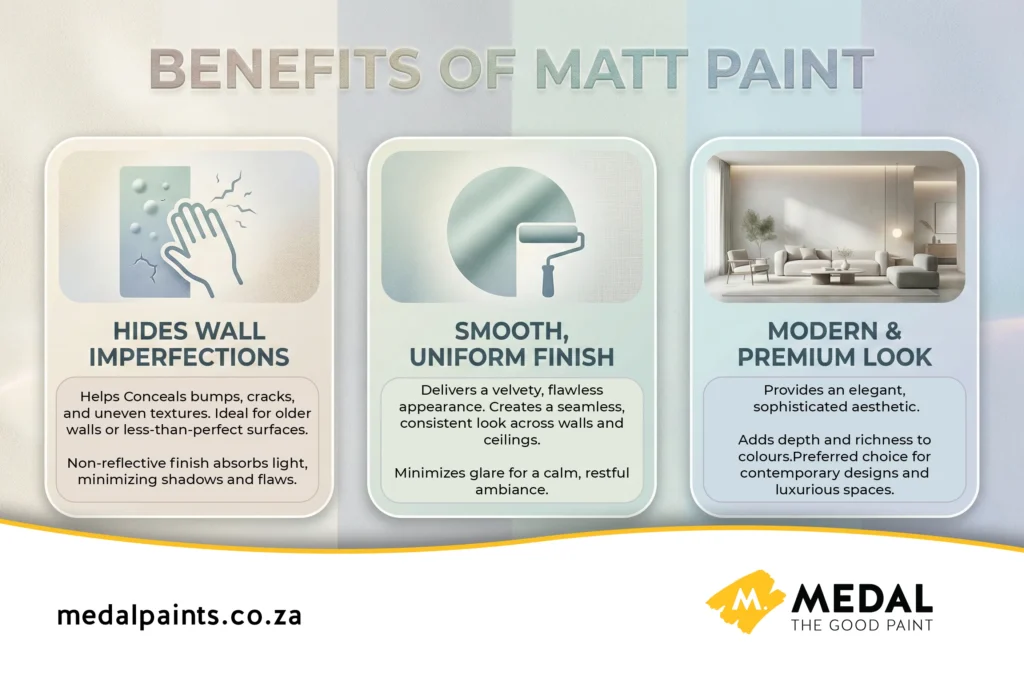
A paint that has no shine and absorbs light instead of reflecting it is called a matt finish. It appears smooth, soft, and premium, giving walls a velvety and modern look.
Matt paint is commonly used in bedrooms, living rooms, hotel rooms, and ceilings. Basically, used in low-touch areas. It is loved by many designers because it feels rich and creates a calm, aesthetic environment.
Why is matt paint used?
If your wall has uneven plaster, cracks, small dents, or roller and brush marks, matt paint hides these surface imperfections beautifully. It makes the surface look smooth and uniform. This is the main reason architects prefer matt finishes for interior walls.
What are the disadvantages of matt paint?
- Matt finishes are hard to clean due to their porous and non-reflective surface.
- They absorb dirt, stains, and fingerprints easily.
- They are not suitable for high-traffic areas like kitchens, hallways, and kids’ bedrooms.
- They are less resistant to moisture and humidity.
- Matt finishes, do not allow polishing to remove imperfections.
- Matt paint absorbs light, so rooms may feel darker, smaller, or more enclosed.
When should you use matt paint?
- On the walls with minor imperfections. Matt paint hides surface flaws such as cracks, patches, and uneven textures better than sheen.
- When you want a premium, modern look. It is ideal for living rooms and bedrooms where a calm and cosy look is preferred.
- In low-traffic areas. It works best in areas where walls are not touched often.
- When you need a premium and non-glossy look. Choose Matt when you do not want any shine on the surface.
What is meant by sheen?
Sheen refers to how shiny or dull a painted surface looks. Some paints have no shine and appear flat, while others are glossy. The level of sheen depends on how much light the surface reflects.
Sheen paints appear bright, smooth, and slightly glowing. They are commonly used in children’s rooms, corridors, kitchens, bathrooms, and commercial spaces. Basically, in high-touched areas.
Why is sheen finish used?
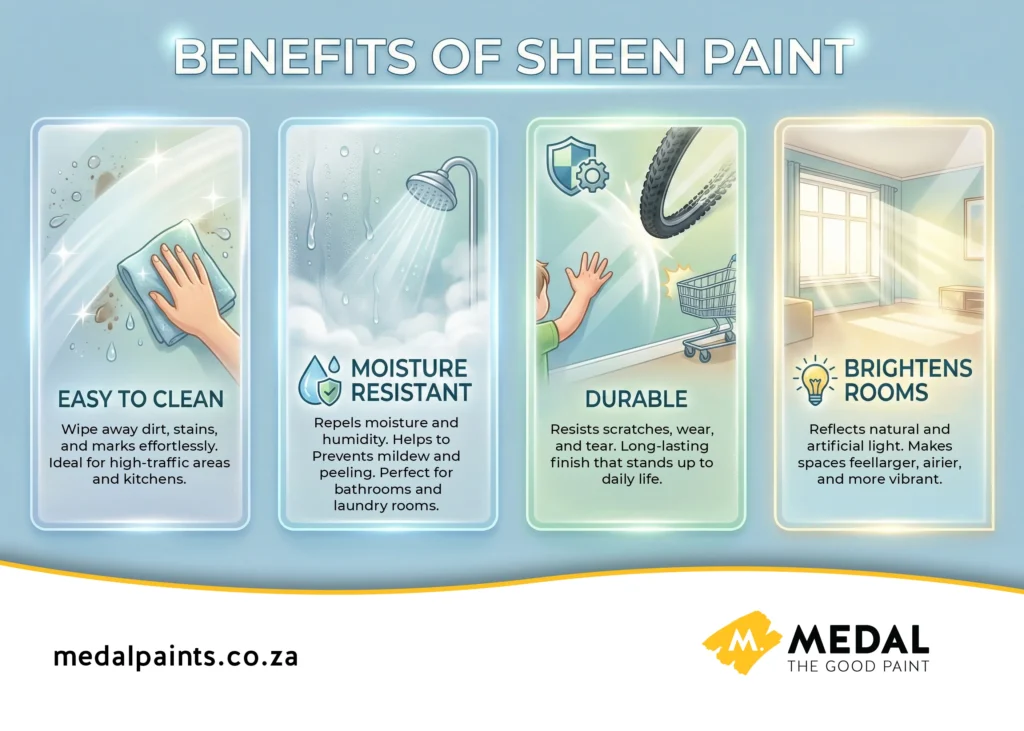
- Sheen paint is tough and easy to clean, making it a good choice for busy areas.
- It resists moisture, which helps prevent fungal growth and dampness in areas exposed to water.
- If you want your room to look shiny, fresh, and bright, sheen paint is a good option.
- The slight shine helps doors, cabinets, and trims stand out.
What are the disadvantages of sheen paint?
- Cracks, dents, and surface imperfections become more visible with sheen paint.
- Extra surface preparation is required before painting.
- If you repaint a small patch, later it may look shinier than the surrounding wall.
- Excessive gloss can sometimes cause discomfort to the eyes.
- Brush and roller marks are more visible if the paint is not applied evenly.
- Sheen paint is generally more expensive than matt paint.
When is a sheen finish used?
- At high-touched areas. Sheen paint is ideal for corridors, kitchens, staircases, and hallways where dirt accumulates easily.
- The areas which are often in contact with water. It handles moisture well, making it suitable for kitchens and bathrooms.
- Children’s room. It works well in children’s bedrooms because crayon marks and stains can be cleaned easily.
- When you don’t want to repaint. Use sheen when you want long-lasting walls with minimal repainting.
- When you want to brighten up enclosed spaces. Sheen is a good choice for small or dark rooms, as it reflects light and makes spaces look brighter and more spacious.
How to choose the right finish: Matt or sheen?
When choosing between matt and sheen, keep the following points in mind:
1. Use of the Wall
- Low-touch areas (bedrooms, home offices, guest rooms) → Matt
- High-touch areas (kids’ rooms, corridors, hallways) → Sheen
2. Cleaning & Maintenance
- Matt: Difficult to clean and prone to staining
- Sheen: Easy to wipe and scrub
3. Wall Condition
- Uneven or imperfect walls → Matt
- Smooth, well-finished walls → Sheen
4. Lighting
- Bright rooms → Matt reduces glare (a shiny surface that can hurt the eyes)
- Dark rooms → Sheen reflects light and makes the room look brighter and more spacious
5. Simple Rule
- Choose matt when appearance and softness matter most.
- Choose sheen when easy maintenance, durability, and brightness are important.
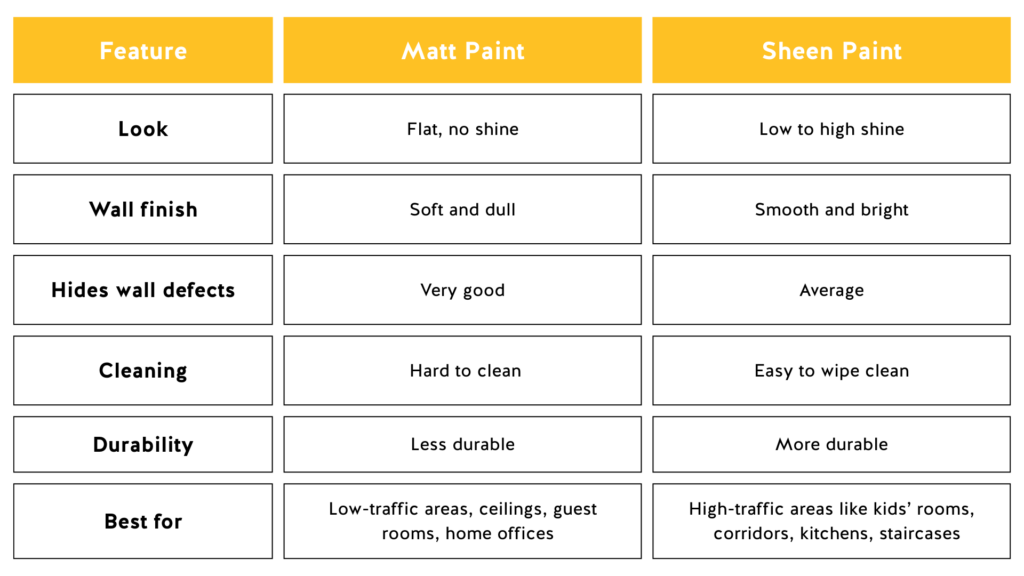
Difference Between matt and sheen paint
Which finish is best for a kids’ room?
For a kids’ room, a finish with some sheen is better than matt. Children often draw or leave marks with crayons on walls, which can spoil the appearance. In such cases, sheen paint helps maintain the wall’s look because it is easier to clean and more durable.
You can consider our products for kids’ rooms, such as Medal’s Professional Trade Low Sheen, Medal Premium Velvet Silk, Medal Premium Water-Based Gloss Enamel, and Medal Premium Non-Drip Enamel.
Frequently Asked Questions
1. Why is sheen paint washable and scrubbable? Sheen paint contains more binder and has a smoother surface, so dirt does not stick easily. This makes it washable and scrubbable.
2. How do matt and sheen paints dry? Matt paint dries as the water or solvent evaporates, leaving solid particles that settle into the porous surface. Sheen paint dries similarly, but its smoother surface forms a harder, more durable film.
3. Can matt paint be washed or cleaned at all? You can clean matt paint lightly, but scrubbing may damage the finish.
4. Is sheen paint always glossy and shiny? Not always. Sheen ranges from low sheen to high gloss.
5. Can I use both matt and sheen finishes in the same home? Yes, you can surely use both at one time for a home. You only need to consider the area where you are going to apply the paint.
Conclusion
Choosing between matt and sheen paint is not complicated once you understand how each one works. There is no need to choose only one. Most homes look best when both matt and sheen are used in the right places. The right finish will keep your home looking fresh and beautiful for years. If you find this article useful, make sure to share it with your kith-kins. Do visit our official website: www.medalpaints.co.za